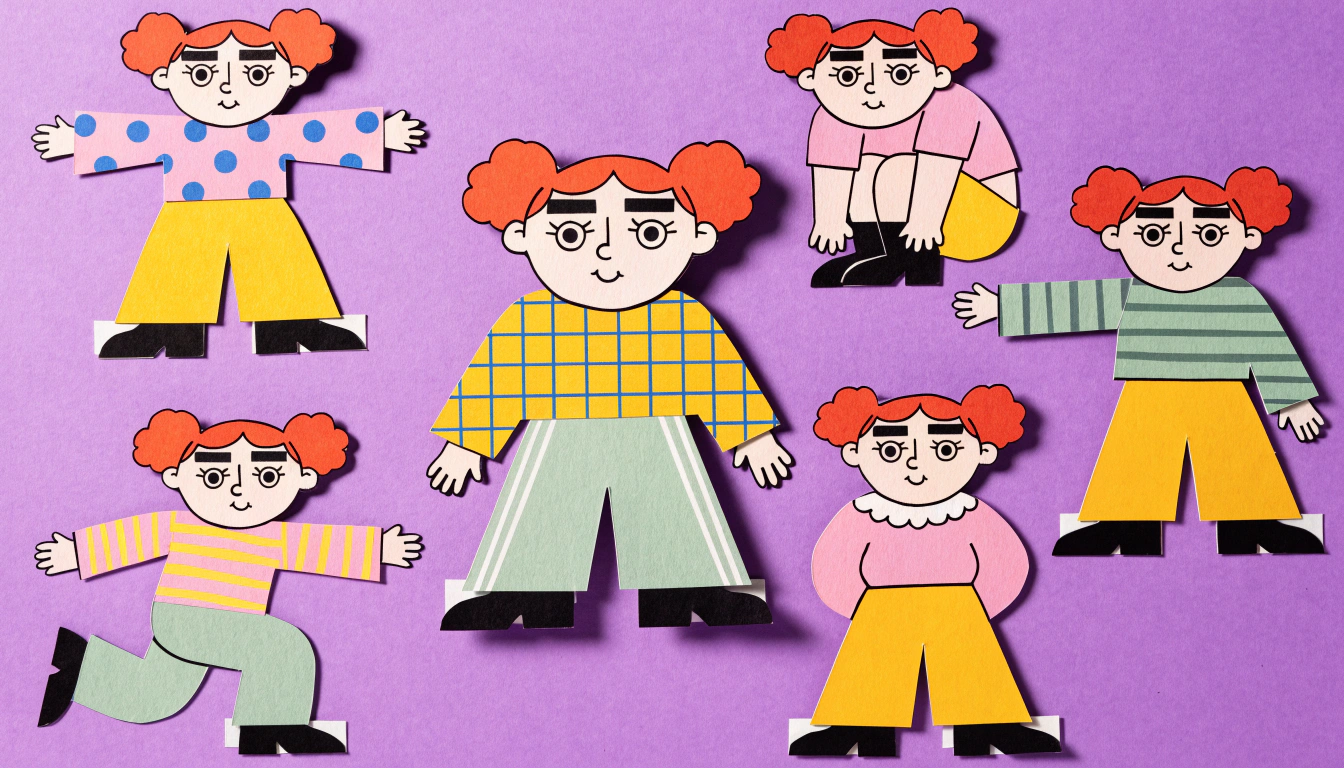
Short answerThere is no single best AI character generator for every brief. Recraft is the stronger pick when you need the same character across poses plus a reusable style and vector export. Midjourney still wins the one-frame look. Gemini and ChatGPT win when the character has to live inside a chat.
Key takeaways
- Recraft, Ideogram, Leonardo, and OpenArt all sell a saved-character or reference workflow. Midjourney now routes that job through Edit Model with up to four reference images.
- Midjourney has no free plan. Basic starts at $10 per month on midjourney.com/pricing. Recraft, Gemini, ChatGPT, Leonardo, Ideogram, and OpenArt all offer a free or weekly-credit tier.
- None of these tools hold hair, pockets, and shoe color perfectly across a long sequence without a reference sheet.
- Pick Recraft for design files and style lock, Midjourney for a single striking portrait, Gemini or ChatGPT when you want to iterate in conversation.
An AI character generator is a model plus a workflow that can reuse a face, outfit, and silhouette across new poses, not a one-off portrait button. This comparison is a dated feature table, not another “top 10” list of chatbots.
How we scored the seven AI character generators
We scored each product on five criteria: consistency across poses, reference-image support, style control, export formats, and free tier. Feature claims were checked on vendor pages on November 9, 2026. We did not run a seven-studio bake-off of the same hero inside every UI, because several of those UIs sit behind paid logins. The shared brief we would send every tool is the same one used in Recraft’s character reference sheet guide: one hero, then a turnaround, then a new pose.
Comparison table
| Criterion |
Recraft |
Gemini |
ChatGPT |
Midjourney |
Leonardo.ai |
Ideogram |
OpenArt |
| Consistency across poses |
Strong with a style plus a sheet |
Good in a short edit series |
Good in one thread, drifts later |
Strong look, cousin problem on turnarounds |
Strong when Character Reference is on |
Unlimited character consistency on Plus and Pro |
Saved character from photo, prompt, or presets |
| Reference-image support |
Image upload, styles, image-to-image |
Photo and texture cues in chat |
Uploads in chat, limited on Free |
Edit Model, up to 4 references (docs) |
Character, style, and content references |
Character Reference, 1–5 images on 4.5 |
Photo, prompt, or presets |
| Style control |
Style Library and custom styles |
Prompt and follow-up only |
Prompt and follow-up only |
Style Reference, Moodboards, Personalization |
Style Reference plus many models |
Strong type and poster styles |
Presets plus many models |
| Export formats |
Raster plus SVG vector |
Raster in chat |
Raster in chat |
Raster (web and Discord) |
Raster, upscale in-app |
Raster, quality export on paid |
Raster, model-dependent |
| Free tier (Nov 9, 2026) |
Yes. 3 generations per style per day, personal use, public images |
Yes. Free consumer Gemini with image generation |
Yes. Limited image creation on Free |
No. Basic $10/mo |
Yes. 150 fast tokens per day, public creations |
Yes. Weekly credits on eligible free accounts |
Yes. Free credits to start |
We checked each endpoint on November 9, 2026. Prices move. Recraft Free is personal use only, with public images and no commercial license. Paid Recraft plans start at $10 per month billed annually for Basic.
Recraft
Recraft Studio is built for designers who need the character to survive a layout, not just a feed. Recraft V4.1 generates the hero. A custom style then locks palette and line weight. The AI character generator page is the fastest path to a first still. Vector export (SVG) is the gap the chat tools do not close.
Limit: Recraft will still drift on a long sequence if you skip the sheet. Hair length, pocket count, and shoe color shift unless you pin them. Free generations are capped, images are public, and commercial use needs a paid plan. For a photo-to-character path, use the AI character generator from photo walkthrough rather than restating it here.
Google Gemini
Image generation lives in the chat. Follow-up edits can keep a face through a short series, and you can feed a photo for texture and color. That is a real advantage when the character is a conversation, not a file.
Limit: there is no design canvas, no vector export, and no reusable style object you can hand to a teammate. Consistency holds for a handful of turns, then the jacket changes. Treat Gemini as a sketch partner, then move the keeper into a tool that stores a style.
ChatGPT
ChatGPT Images (OpenAI) is the fastest path from a sentence to a face if you already live in the chat. Free includes limited image creation. Go is $8 per month. Plus is $20 per month, with more accurate image creation, per OpenAI’s pricing page. Iteration is the product: you talk the haircut down instead of rewriting a prompt from scratch.
Limit: ChatGPT is not a character system. There is no saved character slot, no turnaround template, and no SVG. Threads forget details. It wins concepts and loses production.
Midjourney
Midjourney still makes the frame you want to look at. Skin, light, and fabric are the reason people keep coming back to it. Edit Model (compatible with v8.1 and v8.2) takes up to four reference images and replaces Omni Reference and Character Reference, per Midjourney’s docs. Basic is $10 per month. There is no free plan.
Limit: the house look fights a flat, on-brand character. Ask for the same person from the back and you often get a cousin. There is no vector path. If the job is one hero poster, Midjourney is still the aesthetic default. If the job is twelve matching poses, it is extra work. For a broader Recraft vs Midjourney split, see Recraft vs Midjourney.
Leonardo.ai
Leonardo.ai is the production rack: 80-plus models on paid plans, Image Guidance with separate Character, Style, and Content references, and an API. Free is $0 with 150 fast tokens per day and public creations. Essential is $12 per month with 8,500 fast tokens, private generations, and 10 personal AI models, per leonardo.ai/pricing.
Limit: Character Reference does not swap a face exactly on every model. Free work is public. The UI is a studio, which is a feature if you want knobs and a cost if you wanted one saved character and a PNG. Side-by-side with Recraft on image generation more broadly: Recraft vs Leonardo AI.
Ideogram
Ideogram earns its place on type. Character workflows on Ideogram 4.5 take multiple reference images, and Plus ($20 per month, or $15 billed annually) and Pro ($60, or $42 billed annually) list unlimited character consistency. Eligible free accounts get weekly credits when you sign in with Google, Apple, or Microsoft. Ideogram does not offer a free trial on paid plans.
Limit: you are buying poster energy and readable labels, not a vector mascot pipeline. Slow credits after priority credits run out mean wait time, not a second quality tier. Recraft Studio also hosts Ideogram as an external model if you already work there.
OpenArt
OpenArt’s product page promises a character from a photo, a prompt, or presets, then reuse in image and video. A free credit start plus paid plans from about $14 per month (OpenArt’s public plans) make it easy to try.
Limit: “saved character” is only as good as the underlying model you pick. Export is raster. Consistency across video is a different, harder problem than a pose sheet. Treat OpenArt as a multi-model front end, not a design system.
How to choose
If the character has to ship as a logo, sticker, or layout, start in Recraft and build the reference sheet before you generate scene two. If you need one cinematic still, open Midjourney. If you need to talk the face into existence, use Gemini or ChatGPT, then lock the keeper elsewhere. If you need many models and an API, Leonardo. If the character wears type, Ideogram. If you want a marketplace of models with a character slot, OpenArt.
Picture-book sequences have a stricter bar. The same hero on every spread is a manuscript problem first, then a sheet problem. That workflow is in How to Write a Children's Book with Consistent Characters.
What still fails
No current generator is a replacement for a model sheet drawn by a person who cares about zipper count. Hands, jewelry, and back views are the usual break points. Chat tools forget. Aesthetic models invent a prettier cousin. Style-lock tools still need you to reject the bad frame. The conductor is still you.
Try it free on the Recraft character generator, then export the first hero as a sheet before you ask for pose two.